
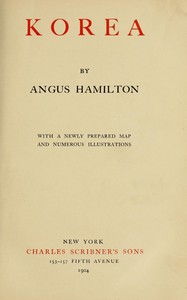
Korea by A. Hamilton
Angus Hamilton's 'Korea' is a time capsule. Published in 1904, it captures the Hermit Kingdom in its very last years of independence. Hamilton, a British journalist, traveled across the peninsula just as the gears of empire were grinding toward annexation. He doesn't tell a single, linear story. Instead, he paints a portrait of a society through dozens of small scenes and conversations.
The Story
The book is built from Hamilton's journey. He starts in the bustling port of Chemulpo (modern Incheon) and ventures inward. We meet Korean officials clinging to old rituals, Japanese diplomats maneuvering with quiet intensity, and Russian agents making their own plays for influence. Most importantly, we meet everyday Koreans—farmers, merchants, monks—going about their lives with a growing sense of unease. There's no epic battle here. The conflict is a slow, creeping pressure. You see it in the new railways being built by foreign hands, in the modern weapons carried by palace guards, and in the resigned faces of people who sense a storm coming but are powerless to stop it. The 'plot' is the death of a nation, observed in real time.
Why You Should Read It
What makes this book special is its immediacy. Hamilton isn't a historian looking back; he's a reporter on the ground. His observations are raw and sometimes biased (it's a product of its time), but they're unfiltered. You get the smells of street food, the feel of a bumpy sedan chair ride, the frustrating opacity of court politics. He admires Korean craftsmanship and resilience but is baffled by the government's inability to adapt. Reading this, you don't just learn that Korea was colonized; you feel the tragic, frustrating how of it. It provides the crucial 'before' picture to the 20th-century story of division and war that followed.
Final Verdict
This is a must-read for anyone fascinated by Korea's modern identity. It's perfect for travelers who want to understand the deep roots of the places they visit, and for history readers who prefer eyewitness accounts over textbook summaries. Be warned: it's an old book, so some attitudes will feel dated. But if you can read it as the fascinating primary document it is—a snapshot taken at the most pivotal moment—it's incredibly rewarding. You'll close the book and look at today's dynamic Korea with a whole new layer of respect for its journey.
The copyright for this book has expired, making it public property. Distribute this work to help spread literacy.
George Miller
4 months agoGood quality content.
Carol Sanchez
1 year agoGreat reference material for my coursework.
Sarah Williams
1 year agoA must-have for anyone studying this subject.
Daniel Young
1 year agoI had low expectations initially, however the arguments are well-supported by credible references. Thanks for sharing this review.

Jessica Lewis
1 year agoFrom the very first page, the author's voice is distinct and makes complex topics easy to digest. One of the best books I've read this year.