
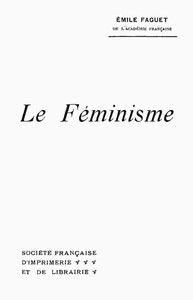
Le féminisme by Émile Faguet
Émile Faguet's Le féminisme is a methodical examination of the women's movement as it stood in 1890s France. Faguet, a respected academic and critic, approaches the topic not as a supporter, but as a curious outsider trying to map its logic and consequences. He structures the book like a debate, first presenting the core feminist demands of the era: access to higher education, entry into professions, and reforms to marriage and property laws. Then, he shifts to his analysis, questioning the social stability of these changes, worrying about the family unit, and expressing doubt about women's true desires versus what activists claimed for them.
The Story
There's no traditional plot. Instead, the 'story' is the unfolding of Faguet's argument. He walks you through each feminist claim, explains its reasoning, and then presents his counterpoints. He discusses everything from women in universities to their potential role in government. The narrative is the tension between a new, revolutionary idea and an established, conservative mindset trying to find a place for it—or contain it. You follow Faguet's train of thought as he concedes some points (like educational opportunity) while firmly rejecting others (like full political equality), all in measured, precise prose.
Why You Should Read It
This book is incredibly valuable for understanding the history of ideas, not through the voices of radicals, but through the voice of the 'respectable' opposition. Reading Faguet is frustrating, enlightening, and oddly transparent. You see all the fears of the patriarchal status quo laid bare: the worry about disrupted homes, the skepticism about women's capabilities, the belief that nature has dictated separate spheres. It personalizes history. This isn't a caricature of a sexist; it's a highly intelligent man showing you the limits of his era's imagination. It makes you appreciate the sheer force of will it took for the feminist movement to overcome not just outrage, but this kind of calm, 'rational' resistance.
Final Verdict
This is not a book for someone looking for an inspiring feminist text. It is, however, perfect for history buffs, sociology students, or anyone interested in the cultural battles of the past. It's for readers who want to go beyond the headlines and slogans and see how deep-seated biases operate in smart people. Think of it as primary source material—a direct recording of a certain intellectual mindset at a pivotal time. Pair it with a work by a feminist contemporary of Faguet, like Hubertine Auclert, and you'll have a gripping, real-time debate across the centuries. Approach it as a historical document, and you'll find it absolutely fascinating.
No rights are reserved for this publication. Thank you for supporting open literature.
Kimberly Wilson
1 year agoFinally a version with clear text and no errors.
Charles Scott
1 year agoFast paced, good book.







Jennifer Perez
1 year agoI didn't expect much, but it challenges the reader's perspective in an intellectual way. A true masterpiece.