
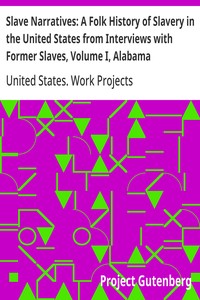
Slave Narratives: A Folk History of Slavery in the United States from…
This isn't a book with a single plot. Instead, it's a massive compilation of first-person accounts gathered by interviewers for the Federal Writers' Project during the Great Depression. They tracked down elderly men and women across the American South who had been enslaved before the Civil War and recorded their life stories.
The Story
The 'story' is thousands of individual stories woven together. You'll read a few paragraphs from someone in Georgia describing the food they ate, then jump to Alabama to hear about the moment they learned they were free. One person might talk quietly about the kindness of a specific enslaver, while the next recounts witnessing brutal violence. There's no central narrative except the collective experience of enslavement and emancipation. The book organizes these fragments by state, giving you a panoramic, ground-level view of the institution from those who endured it.
Why You Should Read It
You should read it because textbooks get sanitized. These voices don't. The power is in the details and the contradictions. The language is sometimes raw, transcribed in dialect, which pulls you right into the room with the speaker. It makes history personal. You're not just learning 'slaves worked on plantations'; you're hearing 90-year-old 'Aunt Sally' describe exactly how her feet ached after a day in the fields and how she soothed them. You feel the anxiety of not knowing where your mother was sold to, and the explosive, confused joy of freedom day. It shatters any distant, academic understanding and replaces it with something human, messy, and unforgettable.
Final Verdict
This is for anyone who wants to understand American history from the ground up, not the top down. It's perfect for readers who loved The Warmth of Other Suns or any oral history that centers real people. It's not a breezy read—you'll need to take it in chunks—but it is a profoundly important one. If you're ready to listen to the voices history almost forgot, this is your book.
There are no legal restrictions on this material. You do not need permission to reproduce this work.
Christopher Davis
5 months agoBeautifully written.
Steven Ramirez
5 months agoI had low expectations initially, however it manages to explain difficult concepts in plain English. This story will stay with me.
Robert Hill
1 year agoBased on the summary, I decided to read it and the content flows smoothly from one chapter to the next. Exactly what I needed.
Brian Lopez
1 year agoPerfect.

Jennifer Robinson
1 year agoI started reading out of curiosity and the narrative structure is incredibly compelling. One of the best books I've read this year.