
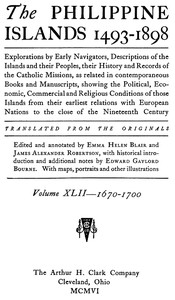
The Philippine Islands, 1493-1898, Volume 42, 1670-1700 by Emma Helen Blair et al.
Okay, let's be clear: this isn't a story with a plot in the traditional sense. The Philippine Islands, 1493-1898, Volume 42 is a curated archive. Think of it as a documentary made entirely of primary sources. The 'narrative' it follows is simply thirty years of colonial administration, year by year.
The Story
The book is a compilation of official documents. You get the yearly reports sent from Manila to the King of Spain. You read letters from Augustinian friars arguing with Jesuit missionaries. There are military dispatches detailing battles against Moro pirates from the south and accounts of uprisings in the provinces. It's the paperwork of an empire, covering everything from tax collection and shipbuilding to religious conversions and descriptions of natural disasters. There's no single hero or villain, just a constant stream of challenges, complaints, and attempts to maintain control over a vast and distant archipelago.
Why You Should Read It
This is where history gets personal. A textbook tells you 'the Spanish built forts.' This book gives you the governor's actual letter begging for more cannons because the wood is rotting in the humidity and the local troops have deserted. You feel the frustration, the arrogance, the fear, and sometimes the genuine curiosity of the people who were there. You see how policies made in Madrid completely misunderstood conditions in Luzon. The themes are timeless: cultural clash, the abuse of power, the resilience of people, and the absurdities of bureaucracy. Reading these documents strips away the romanticized version of history and shows the gritty, complicated, and often flawed human endeavor behind it all.
Final Verdict
This is not for the casual beach reader. It's a specialized, academic work. But if you're a history enthusiast, a student researching the Spanish colonial period, or a Filipino looking for a direct, unvarnished connection to this specific era, this book is a treasure trove. It's perfect for anyone who prefers to form their own conclusions from original sources rather than reading a historian's interpretation. Be prepared for dense, old-fashioned language and a complete lack of hand-holding, but the reward is an authentic, unfiltered window into a pivotal time.
This historical work is free of copyright protections. It is available for public use and education.

Robert Torres
9 months agoComprehensive and well-researched.