1

The Mischievous Typesetter — Context and Discussion
15
4
Project Gutenberg
2021
Science fiction; Short stories; Linotype -- Fiction
Readers of public-domain and historical texts
Project Gutenberg digital edition
en
Edition facts
Words: 9,271
Reading time: 41 min
Text sections: 1
Source:
Project Gutenberg record #65861
A linotype operator with a red nose and a talent for machine-wrangling is sentenced to tame a rebellious typesetter, but the machine's mischief escalates into a battle of wits involving poetry, proofreaders, and a judge with a grudge.
Editorial Edition Score
4.4/5
★★★★★
★★★★★
Calculated from edition completeness, EPUB availability, text structure and catalogue metadata. Not a user rating.
Edition quality
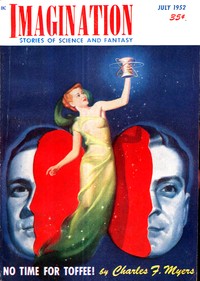
Noel Loomis's 1952 story pits a lanky, red-nosed linotype operator named High-Pockets Jones against a machine that seems to have a mind of its own. The tale opens in a courtroom where the judge—a former proofreader—sentences High-Pockets to work on a malfunctioning linotype at the Daily News. The conflict is framed as a professional grudge match: proofreaders versus operators, with the judge wielding judicial authority to settle old scores. High-Pockets, described as a "Dean of Barnstormers and Wizard of the Linotype," must navigate not only the machine's quirks but also the hostile proofroom, where his towering height and red nose make him a conspicuous target.
The Anatomy of a Feud
The story's central tension is the traditional enmity between proofreaders and linotype operators. High-Pockets bristles at proofreaders, calling them "comma chasers," while the judge, a former proofreader, uses his position to force High-Pockets into a humiliating assignment. This professional rivalry is embodied in the judge's sarcastic remark that "a linotype operator is very near the bottom of the scale of humanity"—only above a poet. The feud is not just background; it drives the plot, as High-Pockets must prove his worth to a man who already despises his trade. The machine, No. 7, becomes a third party in this conflict, responding to the emotional atmosphere in ways that blur the line between mechanical failure and intentional sabotage.
The Machine as Co-Conspirator
No. 7 is not merely a faulty linotype; it appears to act with purpose. When the judge accuses High-Pockets of composing bad poetry, the machine inserts a verse into the copy: "'Tis dawn in the woods. A gentleman slumbers / Beneath the protection of wild cucumbers." High-Pockets insists, "No. 7 did it." The machine also causes physical disruptions—a stuck plunger, a chattering clutch—that seem timed to embarrass the judge. Loomis gives No. 7 a personality through its reactions: it "sympathizes" with High-Pockets, hesitates at the judge's outburst, and even allows corrections without trouble when it feels friendly. This anthropomorphism is played straight, making the machine a character rather than a prop.
Physical Comedy and Workplace Detail
High-Pockets's gangly frame is a source of recurring physical humor. He is described as "all seven gangling feet" with a red nose that "follow[s] an eccentric orbit up among the fluorescent lights." His movements—ducking lights, weaving through the composing room—are rendered with precise, almost slapstick detail. The story also grounds its fantasy in the specifics of newspaper production: the composing room, the proofroom, the stereotype room, and the tools of the trade (Crescent wrench, first-elevator cam). This workplace realism contrasts with the absurd premise, creating a believable setting for a machine that writes poetry. The union chairman's introduction of High-Pockets as "Dean of Barnstormers and Wizard of the Linotype" hints at a wider subculture of itinerant operators, adding depth to the protagonist's background.
Readers should pay attention to how Loomis balances the fantastical premise with the gritty details of a 1950s newspaper shop. The story's humor depends on the tension between High-Pockets's professional pride and the machine's unpredictable behavior. Note also the recurring motif of the judge's dual role as magistrate and proofreader—a conflict of interest that colors every interaction. The excerpts leave open whether No. 7 is truly sentient or merely a convenient scapegoat for High-Pockets's own mischief.
Reader reflection
Your personal reading reflection
Build a private reading journal entry for this title.
Your progress
0
/
10
2
Did this book hold your interest?
3
How likely are you to recommend this book?
4
How much effort did this book require?
5
Did the book meet your expectations?
6
Did you relate to its people, ideas, or situations?
7
Did you gain anything practical from the text?
8
Did any part of the book stay with you emotionally?
9
Which lesson or insight stayed with you?
10