1

Mo-Sanshon! — Background and Themes
15
2
Project Gutenberg
2021
Science fiction; Impostors and imposture -- Fiction; Adventure stories; Martians -- Fiction; Human-alien encounters -- Fiction; Earth (Planet) -- Fiction
Readers of public-domain and historical texts
Project Gutenberg digital edition
en
Edition facts
Words: 12,820
Reading time: 56 min
Text sections: 2
Source:
Project Gutenberg record #64302
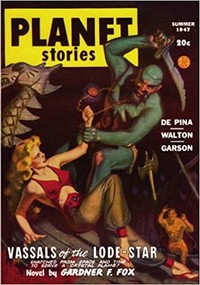
Bryce Walton's 1947 novella follows entomologist Jonathan Ward, branded paranoid for believing Martian insectoids called Mo-Sanshon secretly infiltrate human society. The narrative shifts from claustrophobic interrogation rooms to Mars's rusted deserts, using precise sensory details and a desperate, racing voice to convey isolation and the collapse of rational authority.
Editorial Edition Score
4.5/5
★★★★★
★★★★★
Calculated from edition completeness, EPUB availability, text structure and catalogue metadata. Not a user rating.
Edition quality
The story opens not with action but with a verdict: Doctor Jonathan Ward, an entomologist, has been officially declared paranoid. The telaudio's recitation of legal codes—"Title C, Section 890, Article 72, Paragraph 18, Lines 72-86, Revised Solar Statutes, 2166"—establishes a bureaucratic future where psychological dissent is pathologized. Ward's panic is immediate and physical: "long suppressed panic hit Ward like a sudden sickness." The prose mirrors his claustrophobia, trapping him in a "Verdict Cube" two hundred floors up, with only a translucent window showing "polychromatic light harmonics" that ironically mock his isolation.
Walton's language oscillates between clinical precision and fevered interiority. Ward's belief in the Mo-Sanshon—"super insects" that can "assume human form"—is presented as both absurd and terrifyingly plausible. The narrative voice stays close to his perspective, using short, breathless sentences during moments of crisis and longer, descriptive passages when he observes the Martian landscape. This rhythm creates a sense of mounting pressure, as if the text itself is being squeezed.
A Voice Under Siege
The opening chapters are dominated by Ward's internal monologue, a voice that is simultaneously rational and desperate. Walton uses legalistic jargon—"Solar Statutory Psychometry"—to underscore the coldness of the system arrayed against him. Ward's thoughts are fragmented, punctuated by dashes and rhetorical questions: "God, no wonder they labeled him psycho!" The prose becomes a kind of evidence, showing how his mind works under duress. He recalls his failed attempts to gather physical proof, but the narrative never confirms whether the Mo-Sanshon are real; it only presents his conviction. This ambiguity is deliberate, forcing the reader to share his uncertainty.
Walton also varies sentence length to reflect Ward's emotional state. When he runs to the window, the sentences are short and urgent: "He ran to the translucent window. He pummeled his aching brain." In contrast, descriptions of the Martian landscape are more measured, almost lyrical: "the rusted tundras of Taclos bordered by the thousand-mile-long, towering mountain chain of the Aljontors." This shift in pace signals a change in focus from internal panic to external observation, even as the threat remains invisible.
The Weight of the Desert
After the crash landing, the narrative slows to a crawl, matching Ward's physical incapacitation. His leg is "crushed, swollen, blue, with little sharp bone splinters edging through tattered flesh." The sensory details are visceral: "dry, gasping heat, enhanced by thin air filled with fine particles of rust." Walton uses the Martian environment as a mirror for Ward's exhaustion—the "blazing expanse of ferric oxidized clay" and "veins of millions of cracks" evoke a world that is both beautiful and hostile. The pacing becomes deliberate, each sentence weighted with effort as Ward drags himself across the desert.
This section also introduces a new character, a woman whose appearance is described in stark contrast to the barren setting: "An unattractive girl was very exceptional. But no less exceptional than beauty such as this girl displayed boldly and proudly." The prose here is more conventional, but it serves to break the monotony of Ward's solitary struggle. The arrival of a jet-car and the woman's approach signal a potential shift in the story's direction, though the excerpts do not reveal her role. The desert, however, remains the dominant presence—a "gaping dark depth of fissure" that halts Ward's progress and forces him to confront his own limits.
Rhythms of Suspense and Release
Walton structures the narrative through alternating cycles of tension and release. The early scenes in the Verdict Cube are claustrophobic, with Ward trapped in a room and a system that refuses to believe him. The language is tight, legalistic, and panicked. Then, the crash landing opens up the landscape, but the danger shifts from institutional to environmental. The pace slows as Ward crawls, but the threat of the Mo-Sanshon remains latent, buried in the "intricate, unexplored regions" beneath the desert.
The author uses recurring motifs to maintain suspense: the Mo-Sanshon are described as "rustling behind their humanoid faces," a sound that Ward imagines but never confirms. The desert itself is personified as "ancient, devastated" and "clinging to life." These details create a sense of pervasive unease, even in quieter passages. The final excerpt ends with Ward wondering if he will ever see "the end of the Mo-Sanshon's dreams of conquest," leaving the resolution open. The pacing throughout reflects a mind under siege, moving from frantic to resigned, but never fully at rest.
Walton's novella is best approached as a study in paranoia rather than a straightforward adventure. The Mo-Sanshon may or may not exist; what matters is how Ward's conviction shapes his reality. Pay attention to the moments when the narrative voice shifts—from legal precision to sensory overload to weary observation—as these changes mark the boundaries of his endurance. The story rewards readers who focus on the texture of its language and the weight of its silences.
Reader reflection
How will you remember this book?
Save your reaction, strongest insight, and memorable passage.
Your progress
0
/
10
2
How much did you enjoy the reading experience?
3
Would you encourage someone else to read it?
4
Did the language feel accessible?
5
How understandable was the text?
6
How closely did the book connect with your experience?
7
Did this book create an emotional response?
8
Which part made the strongest impression?
9
Which lesson or insight stayed with you?
10