1

The Little Pets of Arkkhan — Key Ideas to Explore
14
1
Project Gutenberg
2021
Science fiction; Human-alien encounters -- Fiction; Asteroids -- Fiction; Parasites -- Fiction
Readers of public-domain and historical texts
Project Gutenberg digital edition
en
Edition facts
Words: 11,215
Reading time: 49 min
Text sections: 2
Source:
Project Gutenberg record #64363
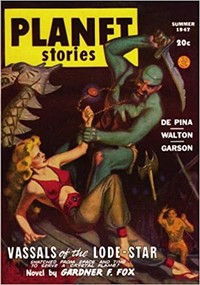
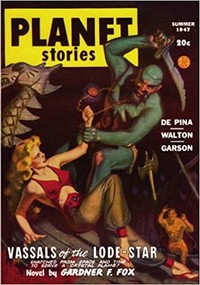
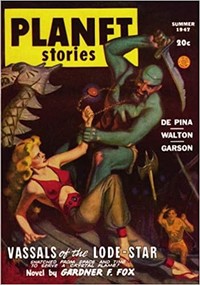
In this 1947 Planet Stories tale, a telepathic parasite invades the mind of astronaut Kent Knight after he touches a furry creature on an asteroid. The narrative shifts between Knight's internal struggle and external action, using fragmented interior monologue and abrupt tonal changes to convey possession and paranoia.
The story opens with a deceptive softness: a "spider thread of sound" that first soothes, then shreds the protagonist's mind. This sensory bait-and-switch sets the pattern for the entire narrative. The parasite, initially described as a "lovely little beastie" and a "furry butterball," is never given a name or origin. Instead, the text focuses on the subjective experience of invasion—Knight's frantic self-reminders of his identity ("I am six feet tall. I weigh one hundred and seventy pounds") and the Thing's silent laughter inside him. The voice of the story itself becomes unreliable, sliding between Knight's thoughts, the parasite's influence, and an external narrator who reports events without fully explaining them.
Fractured Consciousness and Interior Monologue
The narrative voice in The Little Pets of Arkkhan is deliberately unstable. Early passages alternate between third-person description and italicized first-person fragments, as if the text itself cannot decide who is speaking. Knight's internal monologue is punctuated by commands: "Remember?" and "I must remember that." These self-directed cues reveal a mind fighting to maintain coherence. The parasite's presence is marked by a shift in register—the Thing "laughed at him—in him"—and by the sudden intrusion of second-person address ("Yes, I know you know my every thought, Thing!"). This technique creates a claustrophobic intimacy, forcing the reader to inhabit a consciousness that is no longer wholly the protagonist's.
Pace as a Tool for Psychological Tension
The story's pacing mirrors Knight's fluctuating control. Early scenes are dense with sensory overload: pain, memory fragments, and the parasite's telepathic chatter crowd the prose. Sentences are short and breathless ("It's gone, his mind observed gleefully") or stretched into run-on streams of panic. Action sequences—such as Knight's attack on Mallory—are compressed into a few rapid paragraphs, while moments of apparent calm are undercut by lingering suspicion. The final exchange with Sammy introduces a new layer of dread: Sammy confesses to feeling "something's trying to steal me," and Knight realizes the infection may have spread. The pace slows here, allowing the implication to settle.
The Unseen Enemy: Omission and Inference
Garson withholds key details about the parasite, relying on inference rather than exposition. The creature is never described beyond its initial appearance as a "ball of fur"; its powers are demonstrated only through Knight's symptoms—pain, memory loss, involuntary violence. The narrative refuses to explain how the parasite works or why it chose Knight. This restraint forces the reader to piece together the threat from fragmented clues: the spider-thread sound, the Thing's ability to "flow into" others, and Sammy's vague unease. The story's effectiveness depends on what is left unsaid. The final pages, in which Knight searches his own mind with a "mental fine-toothed comb," leave the outcome ambiguous, reinforcing the theme of invisible contamination.
Readers should pay close attention to the story's shifts in typography and punctuation—italics, dashes, and ellipses often signal the boundary between Knight's thoughts and the parasite's influence. The narrative does not resolve whether the Thing is defeated or merely dormant. Because the excerpts are incomplete, the ending remains uncertain; the text may reward a second reading focused on tracking who (or what) is speaking at any given moment.
Reader reflection
What did you think of this book?
Answer a few questions and save a private reflection on this device.
Your progress
0
/
10
2
What was your overall reaction to the book?
3
How likely are you to recommend this book?
4
How demanding did the text feel?
5
Did the book give you something worth debating?
6
Would a second reading be valuable?
7
Did the book offer a fresh perspective?
8
Which part made the strongest impression?
9
In one sentence, what did you learn?
10