1

Once Upon a Monbeast... — A Reader’s Guide
12
2
Project Gutenberg
2021
Science fiction; Short stories; Science fiction -- Authorship -- Fiction
Readers of public-domain and historical texts
Project Gutenberg digital edition
en
Edition facts
Words: 5,489
Reading time: 24 min
Text sections: 1
Source:
Project Gutenberg record #65772
Charles E. Fritch's story follows a struggling science-fiction author who, after receiving a harsh rejection from a famous writer, fires back a furious letter—only to find his creations taking on a life of their own. The narrative explores the blurred line between fiction and reality through the author's own craft.
The story opens with a direct address from the narrator, who immediately establishes a confessional tone: "That's not my real name up there, and in a little while you'll discover the reason why." This framing device signals that the tale is both personal and cautionary. The narrator, a struggling science-fiction writer, describes his frustration with the field in visceral terms—"blood, sweat and postage stamps"—before recounting a devastating rejection letter from a famous author, Donald MacDonald. The letter's blunt dismissal ("you seem to have no talent for writing") triggers a furious reply, and the narrator's rage is rendered with hyperbolic intensity: "It was a letter full of more than fire and brimstone. It was radioactive."
Diction of Disillusionment
Fritch's narrator uses a colloquial, self-deprecating voice that mirrors the pulp magazine origins of the story. Phrases like "batted out" and "to top it off" create a conversational rhythm, while the exaggerated description of his anger—"I would have run down the nearest boy scout just to see his blood spatter"—reveals a character teetering between self-pity and dark humor. The rejection letter itself is a model of polite cruelty, its clinical tone contrasting sharply with the narrator's emotional outburst. This juxtaposition underscores the power imbalance between the established author and the novice, a dynamic that drives the plot.
The Unreliable Narrator's Confession
The narrator's insistence that he is telling the truth—"I've got to get this thing off my chest once and for all"—immediately raises questions about his reliability. He admits to using a pseudonym and hints that the story will explain why. His description of his own letter as "radioactive" suggests an intensity that may have consequences beyond the page. The framing device of a confession implies that the events to come are extraordinary, yet the narrator's voice remains grounded in the mundane details of a writer's life: "Then I had a beer." This tension between the ordinary and the fantastic is a key structural choice.
Metafictional Play with Genre Conventions
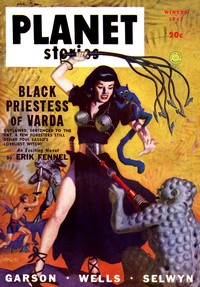
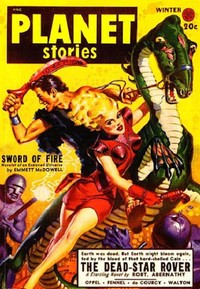
Fritch embeds a critique of science-fiction writing within the story itself. The narrator's struggle is not just financial but creative; he is "crazy enough to tackle such a field." The rejection letter dismisses his talent for science-fiction specifically, and the narrator's vow to become a writer "just to show him up" sets up a revenge plot that may involve the very monsters he creates. The title's pun on "monster" and "beast" hints at a literalization of metaphor—the bug-eyed monsters of pulp SF becoming real. This self-referentiality invites readers to consider the relationship between author and creation.
Voice as a Marker of Character
The narrator's voice is distinct from MacDonald's formal, dismissive tone. Where MacDonald writes with detached politeness ("I appreciate your efforts..."), the narrator's response is raw and ungrammatical: "To hell with grammar at a time like that." This contrast in diction defines the two characters without physical description. The narrator's internal monologue, full of hyperbole and self-justification, paints him as impulsive and prideful. Fritch uses these vocal differences to advance the conflict and to hint at the narrator's potential for self-destruction—a trait that may prove central to the story's resolution.
Readers should pay close attention to how Fritch uses the narrator's voice to blur the line between confession and fiction. The story's brevity (under 6,000 words) rewards careful reading of its layered ironies. Consider how the author's own position—writing a story about a writer—might reflect on the genre's conventions. The excerpts suggest a playful, self-aware narrative that invites speculation about where the boundary between creator and creation truly lies.
Reader reflection
How did this book work for you?
Your answers remain private and are stored only in this browser.
Your progress
0
/
10
2
Was reading this book enjoyable?
3
Would you encourage someone else to read it?
4
How easy was the book to follow?
5
What did you think about the pace?
6
Would a second reading be valuable?
7
What did you appreciate most?
8
Did the book offer a fresh perspective?
9
What is the main idea you are taking away?
10